Extra payments in a fixed monthly loan schedule
Follow monthly principal, rounded interest and extra payments, and understand what a shorter payoff comparison includes.
Enter a nominal rate and a term
The loan model divides the nominal annual rate by 12 and uses equal monthly periods. It is an annuity calculation, with principal divided by months at zero interest. An upfront fee is paid separately and is not added to the financed balance. This is not a regulatory APR disclosure or a daily-interest calendar.
Principal follows monthly interest
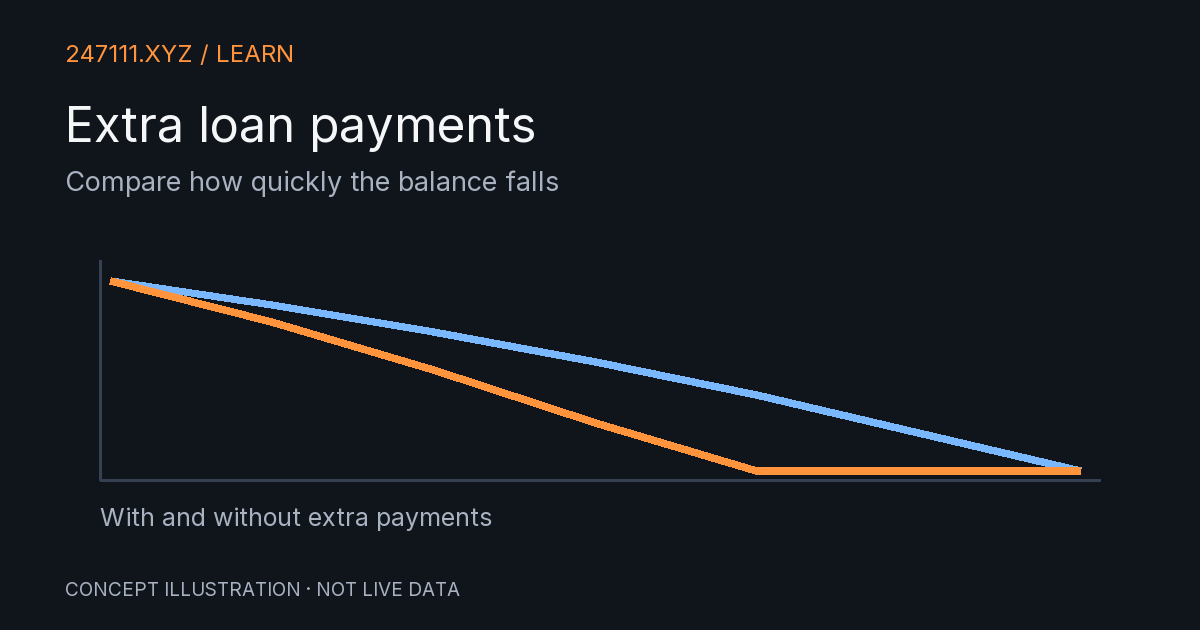
Closing balance = opening + rounded interest − capped paymentInterest is calculated on each opening balance and rounded half up to cents. The regular installment pays interest first; remaining payment and requested extras reduce principal. Hypothetically, 1,200 at 0% for 12 months needs 100 monthly. Adding another 100 monthly clears it in six months. One-time extras use contractual month numbers; several entries for the same month are combined.
Compare the same loan without extras
Interest saved and months saved compare the extra-payment schedule with the same principal, rate and term without extras. The regular installment is not recast. Extras after payoff are unused, and no payment exceeds the amount owed. Browse or export the schedule to see which months change.
Check the final installment
Cent rounding can leave a small residual or make the last payment smaller. At the final contractual month the model clears the remaining balance and explicitly reports an adjusted installment. Monetary inputs must represent whole cents. Actual lender rules can also include daily accrual, variable rates, prepayment charges, insurance and taxes, all excluded here.