
Infrastructure shared by distinct vault products
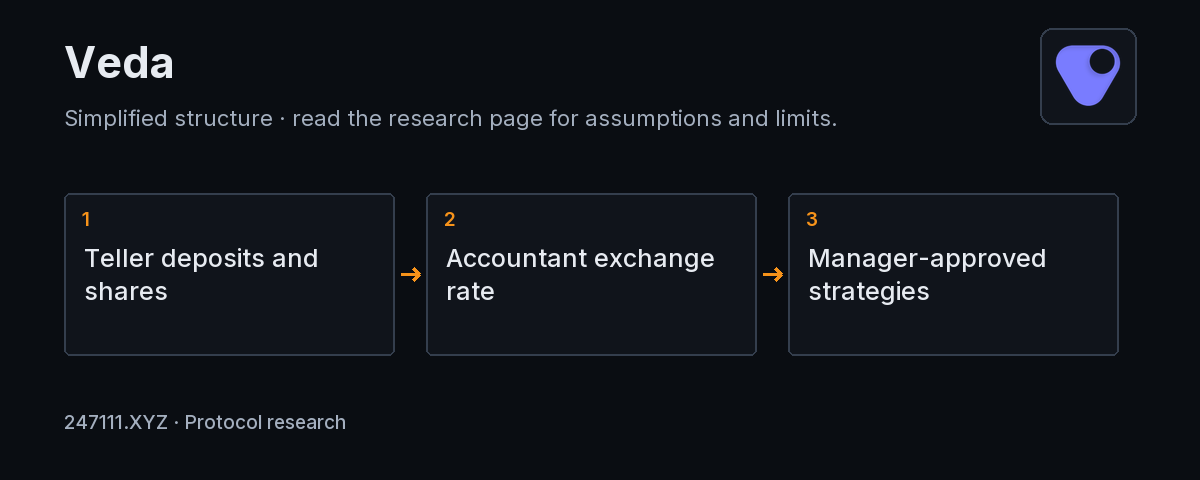
Veda's BoringVault architecture separates asset custody and share issuance from surrounding modules. A Teller handles user-facing deposit and withdrawal interactions, an Accountant provides share exchange rates, and a Manager controls strategy operations. Different deployments can select different module variants, assets and permissions.
A share rate depends on vault accounting
The Accountant publishes the relationship between shares and underlying assets with configured update safeguards. The Manager verifies strategy calls against permitted operations encoded in Merkle proofs. These controls define what a strategy can do; they do not guarantee that every permitted destination will maintain value or liquidity.
Aggregate capital does not describe every exit
The Veda provider row is broader than one branded vault. Its reported TVL cannot identify a particular vault's collateral mix, share lock or available withdrawal buffer. Some deployments use delayed, solver-based withdrawal queues, while others have an instant buffer with its own capacity. Inspect the specific product rather than applying another vault's exit assumptions.
Follow all modules and destinations
- Review strategy permissions and the parties able to change or execute them.
- Check accounting update conditions, deposit restrictions and withdrawal queue parameters.
- Include the risks of the underlying protocols and assets; infrastructure reuse does not make different vault strategies economically identical.