
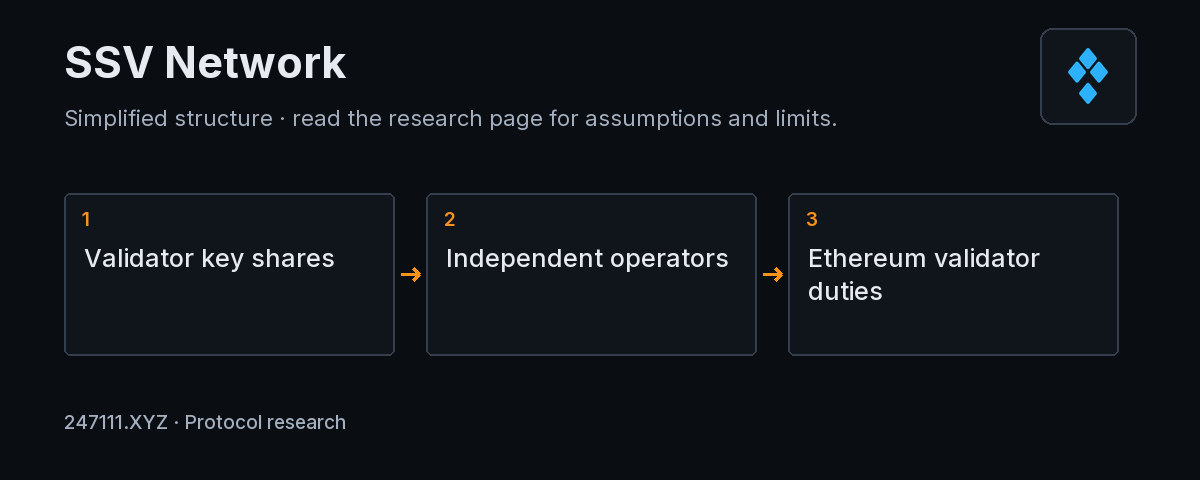
Distributed validation, not a lending reserve
SSV uses distributed validator technology to spread validation duties across independent operators. Operators hold shares of a validator's signing key and cooperate to produce valid signatures. The design distinguishes validation keys from withdrawal credentials; the latter determine control of the underlying withdrawal path.
Operator fees and governance are separate
The current network documentation describes ETH-based operator and network fees. SSV is the governance token, rather than a receipt for every ETH operated through the network. A validator cluster needs enough funded runway for its operating obligations, and its effective stake balance matters to fee accounting.
Interpret attributed stake carefully
Capital associated with distributed validators is not idle liquidity available for loans or swaps. It can also overlap with stake represented by another staking product. Adding SSV's reported TVL to every receipt-token protocol's balance can therefore misrepresent independent capital. For a research comparison, identify the service's role in the validator stack.
Operational risks worth separating
- Operator independence, uptime and sufficient signing participation affect validator operation.
- Funding runway and network/operator fee changes require monitoring independently of gross Ethereum rewards.
- Withdrawal ownership does not eliminate downtime, slashing or smart-contract risks in the staking arrangement.