
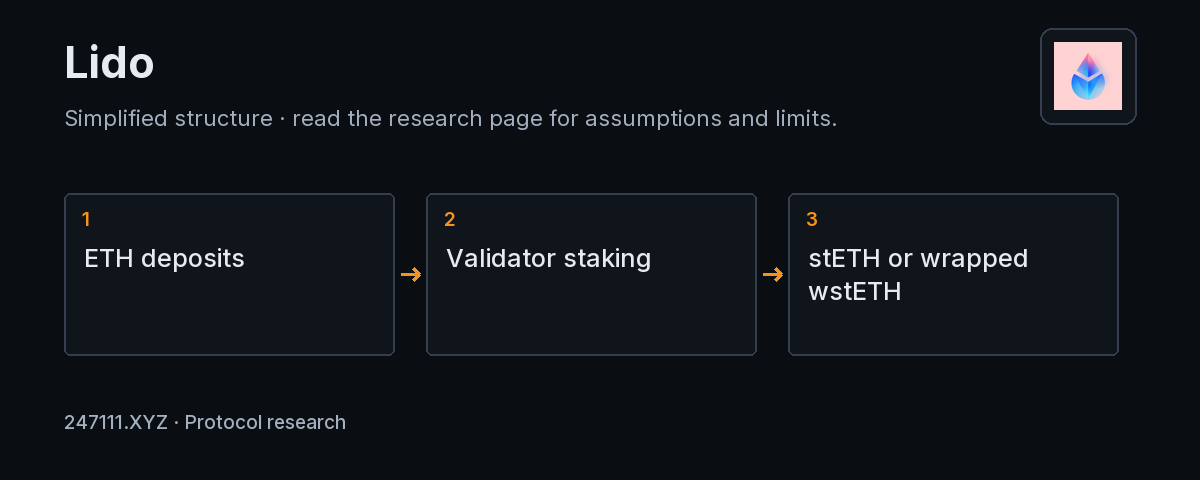
Liquid staking changes the form of an ETH position
Lido manages staking deposits through a protocol with node operators and governance. Ethereum staking is its primary focus. A liquid receipt can be transferred or used in other applications while the underlying ETH remains exposed to staking. This is different from a bank deposit or a fixed-interest instrument.
stETH, wstETH and LDO are different exposures
stETH represents the liquid staking position; wstETH is its wrapped form. LDO belongs to the protocol's governance framework. Comparing the price of LDO with Lido TVL does not establish the value of a stETH holder's redemption claim. A receipt used as collateral elsewhere also inherits that lending market's liquidation rules.
Read TVL and exit liquidity separately
The reported capital panel is a provider observation, not a quote to sell the entire staking pool. Protocol withdrawals depend on available ETH and withdrawal processing. Selling a receipt on a secondary market follows that venue's available liquidity and can produce a different price. A high TVL figure does not remove this difference between redemption and sale.
What can change the outcome
- Validator penalties or slashing can affect the assets supporting receipts.
- Oracle, contract and governance dependencies are part of the protocol position.
- Using a receipt in another strategy can add leverage, liquidation or liquidity risk; count those separately from staking rewards.