
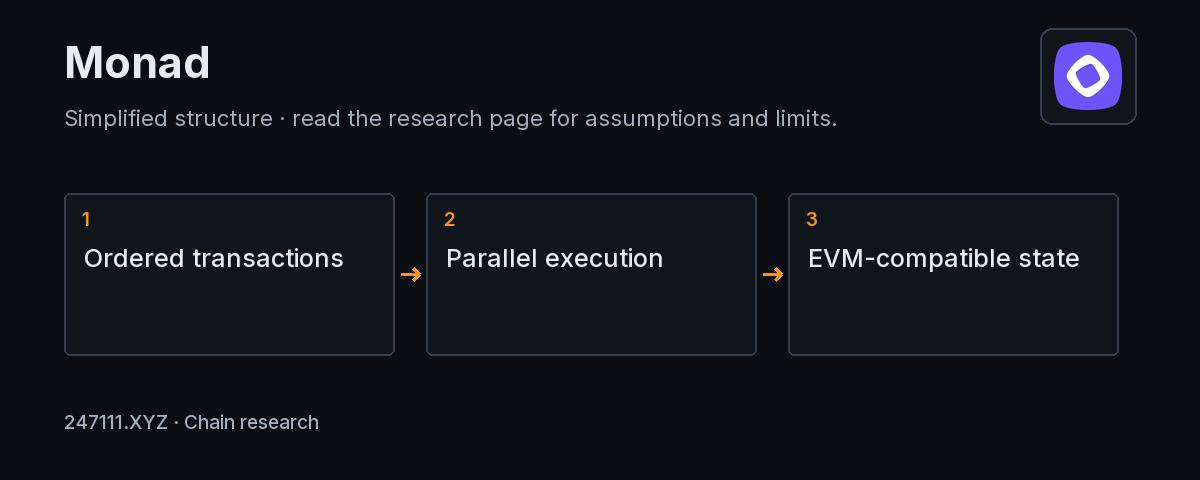
An EVM-compatible layer 1
Monad is a layer-1 blockchain with EVM bytecode compatibility. Its documented architecture separates consensus from execution and uses techniques including parallel execution and a specialized state database. These are network execution choices; individual DeFi applications still define their own lending, exchange and vault behavior.
Network identity and native assets
MON is the network's native asset. Token contracts deployed on Monad can represent other assets or bridged claims, so an Ethereum-compatible wallet interface is not proof that an asset has the same backing on both networks. Check the mainnet configuration and token contract rather than importing a testnet or another chain's assumptions.
Capital is not a throughput benchmark
Provider-reported TVL measures tracked application capital in dollars. Network throughput targets, transaction count and TVL describe different things. A fast transaction can still encounter a shallow pool or unavailable lending liquidity. Compare protocol deposits, observed activity and the assets supporting those balances before interpreting chain growth as broad market adoption.
Questions for application research
- Verify mainnet addresses, available oracle feeds and the exact deployed contract version.
- Treat bridge or wrapped-asset backing as a separate dependency from chain consensus.
- Check actual liquidity and withdrawal conditions; execution performance does not guarantee a trade price or a vault exit.