
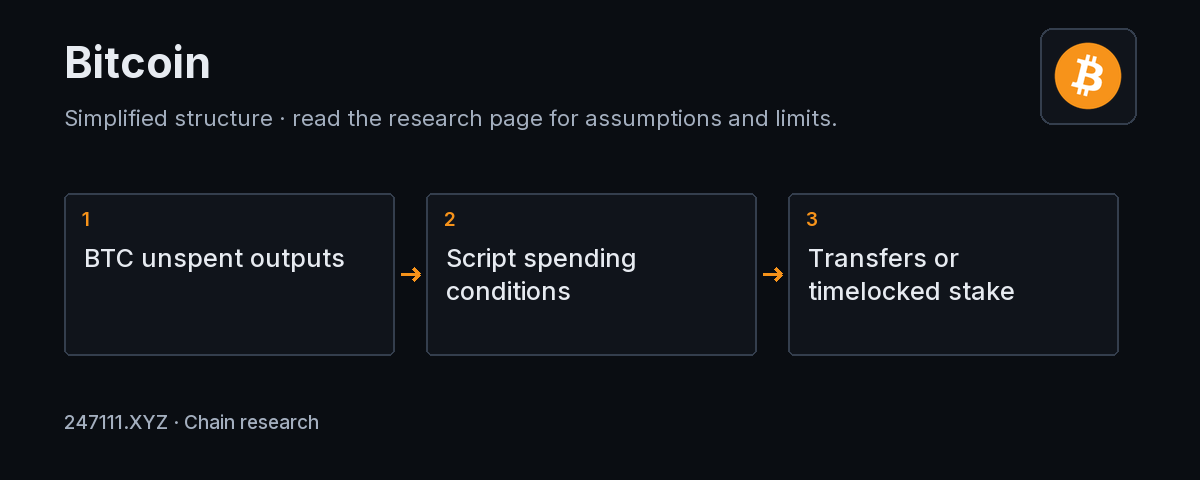
Native Bitcoin uses transaction outputs
Bitcoin tracks spendable transaction outputs secured by spending conditions and proof-of-work consensus. It does not use the same general-purpose account-and-contract model as Ethereum. Products described as Bitcoin DeFi can use very different structures, including native scripts, wrapped BTC on other chains or separate execution networks.
The underlying BTC and its representation
A wrapped token introduces custody, bridge or redemption assumptions that are separate from holding native BTC. Babylon's documented staking design instead locks native Bitcoin using scripts and time conditions. Neither description means that Bitcoin mining consensus has changed into ordinary proof-of-stake staking.
Read provider attribution carefully
Bitcoin-attributed TVL is a provider-defined application measurement, not the value of every Bitcoin or the size of the Bitcoin network's monetary base. Identify the contracts or scripts behind a protocol balance before comparing it with Ethereum deposits. The fee to move native BTC depends on virtual transaction size and satoshis per virtual byte, not a percentage of the transferred value.
Exit and security questions
- For native scripts, inspect timelocks and the signatures required to recover funds.
- For wrapped assets, investigate who controls backing and how redemption works.
- For staking products, distinguish operator/slashing conditions from mining fees and block confirmation risk.