
An allocator rather than one lending pool
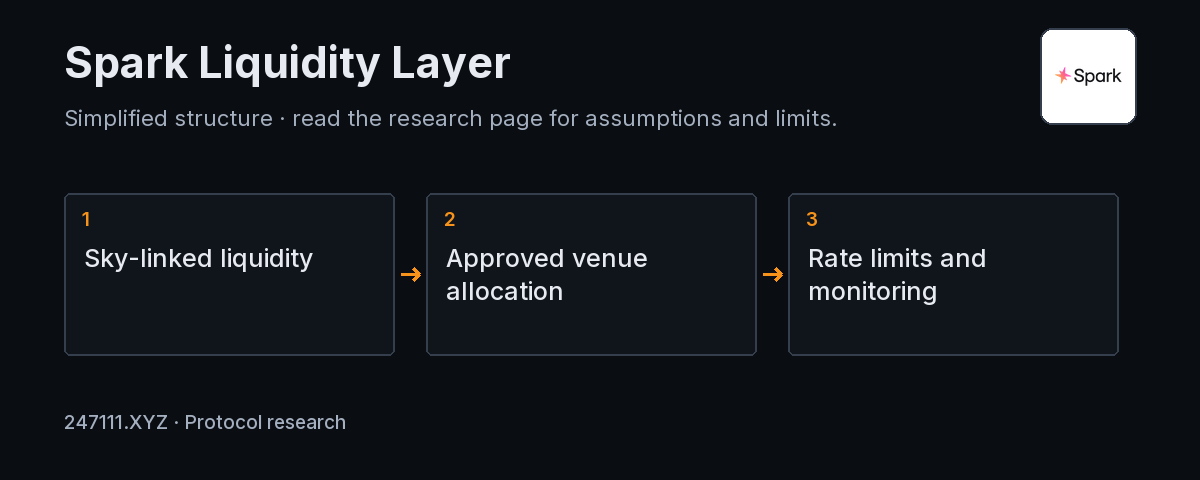
The Spark Liquidity Layer moves capital among approved venues within the Spark ecosystem's allocation framework. Current documentation describes governance-approved integrations, rate limits, slippage constraints and restricted operational roles. The layer's function differs from an individual borrowing market and from a user's savings-vault receipt.
Permissions constrain capital movement
Operational automation can move funds only through configured routes and limits. Governance and emergency controls remain part of that model. Constraints can bound a particular action, but they do not erase the credit, issuer, oracle or contract exposure of the venue receiving the assets.
Do not sum ecosystem labels blindly
Liquidity allocated into a lending venue can also appear in that venue's own reported balances. The Liquidity Layer TVL, SparkLend capital and Spark Savings figures therefore need scope checks before they are added as independent assets. A capital allocation is not trading volume, profit or the amount instantly withdrawable by every participant.
Research the destination and the route
- Inspect the approved destination, its asset backing and withdrawal rules.
- Review governance roles, rate limits and the conditions for emergency intervention.
- Compare changes in allocation with liquidity available at the affected markets; a transfer between venues need not represent a new outside deposit.