
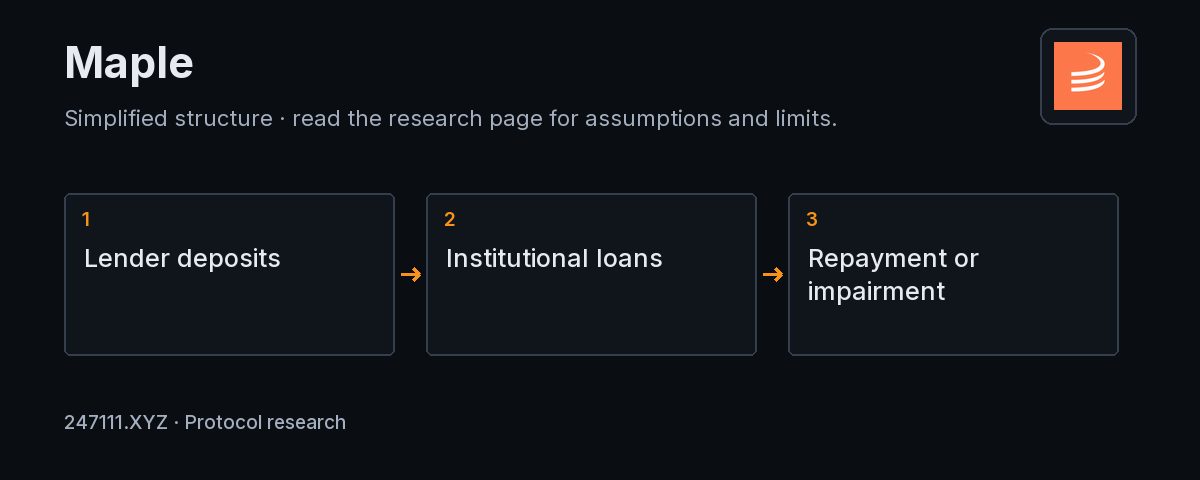
Credit exposure exists behind the onchain position
Maple's lending products can provide exposure to loans originated to institutional counterparties. Contract interfaces and tokenized shares make balances visible, but repayment still depends on the loan arrangements and borrowers. The documented Syrup risks include default and loss even where collateral supports a loan.
Product shares are distinct from a token quote
A product such as syrupUSDC or syrupUSDT has its own underlying asset, terms and share accounting. Its lending exposure is different from the market price of a protocol token. A stablecoin denomination does not guarantee a constant redeemable value after costs, impairments or losses.
Read impairment and liquidity alongside TVL
Reported protocol capital is not cash waiting for every lender to withdraw. Loan duration, product liquidity and withdrawal arrangements matter. Maple documents impairment as a way to recognize a potential repayment problem before a final default; an exit during impairment can lock in a loss and change participation in later recovery. A high TVL does not resolve those credit questions.
Questions for the particular lending product
- Review borrower concentration, collateral arrangements and the applicable legal terms.
- Identify administrative controls, product eligibility and the actual withdrawal process.
- Distinguish a quoted annualized return from realized proceeds after loan losses, fees or delayed recovery.