A resource model rather than Ethereum gas
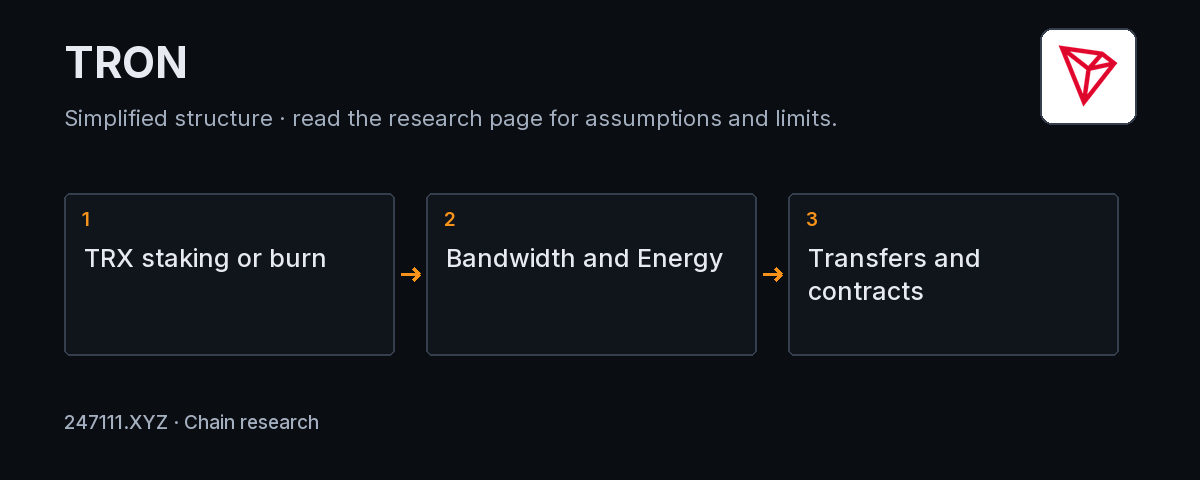
TRON distinguishes Bandwidth for transaction data from Energy for smart-contract execution. Staking TRX can obtain network resources; transactions that exceed available resources can consume TRX under the network's fee rules. This makes a quoted Ethereum-style gas price an unsuitable description of every TRON transfer.
TRX and TRC20 assets have different roles
TRX is the native network asset. A TRC20 stablecoin such as a dollar-pegged token is issued under its own contract and redemption arrangements. Holding that token does not give an account unlimited execution resources. The required resources depend on the transaction and account circumstances, rather than only on the amount being transferred.
Keep circulation separate from TVL
Stablecoin circulation on TRON includes tokens outside lending and exchange contracts. Chain TVL instead reflects tracked application capital. The two measures answer different questions and should not be added as independent deposits. JustLend's lending markets and its sTRX staking product also have separate balance and exit mechanics, despite sharing a brand.
Research resources and withdrawal conditions
- Check Energy and Bandwidth assumptions for the exact transfer or contract interaction.
- Read collateral limits and liquidation rules for lending; those differ from staking unbonding conditions.
- Issuer controls and redemption access remain relevant even when a stablecoin's observed market price is close to one dollar.